
A retaining wall holds back soil and prevents erosion. Over time, natural forces apply immense pressure that can compromise these essential outdoor structures. Addressing damage early prevents minor problems from escalating into a catastrophic collapse that requires complete replacement. Learning how to spot and repair retaining wall issues preserves your property’s long-term value, safety, and structural integrity.
Many homeowners delay maintenance because they underestimate the sheer weight of the earth pressing outward. This hesitation frequently leads to severe structural failure and expensive property damage. Rich’s Landscaping brings decades of hardscaping expertise to every project, offering advanced assessments and durable structural restoration to make sure your barriers can withstand regional soil and climate shifts.
Catching the Warning Signs Early
Routine visual inspections are vital for maintaining your wall’s stability. Examine the structure for bulging, cracking, or bowing along the surface. These cues signal that the wall is actively struggling to hold back the earth.
- Cracks and Voids: Even small cracks in stone or concrete require prompt evaluation. A minor crack can indicate severe drainage problems hidden deep behind the surface. If you notice structural shifting or cracking, a professional inspection of retaining walls in Doylestown, PA can resolve issues before total failure occurs.
- Water Pooling: Pay close attention to water pooling directly behind the wall after rain. This trapped water adds massive weight to the soil, pushing the structure beyond its designed load capacity.
- Tilting and Separation: If the top of the wall tilts forward or separates from adjacent structures like stairs or walkways, the center of gravity has shifted dangerously.
Warning: Ignoring early indicators of wall failure often leads to dangerous collapses. Never underestimate the destructive power of wet, heavy soil pressing against a compromised structure.
Common Causes of Retaining Wall Failure
Understanding why these structures fail helps you choose the correct repair method. Most deterioration originates from a handful of highly preventable design flaws or maintenance oversights.
Poor Drainage and Hydrostatic Pressure
Water accumulation represents the single greatest threat to a retaining wall. Poor drainage allows moisture to saturate the soil, drastically increasing the lateral force against the structure. This built-up hydrostatic pressure pushes the blocks or stones outward. Without functional weep holes or a drainage pipe, water has no escape route, creating a “dam” effect that accelerates degradation. Furthermore, during winter, this saturated earth freezes and expands, causing severe structural shifting.
Soil Pressure and Heavy Loads
Miscalculating the appropriate amount of soil pressure during construction often leads to failure. Adding new buildings, parking heavy vehicles, or planting large trees near the top edge introduces unexpected heavy loads. If the foundation was not dug deep enough, a shallow base cannot provide the leverage necessary to hold back tons of moving earth, especially in areas with expansive clay soils that expand significantly when wet.
Step-by-Step Retaining Wall Repair Process
When executing retaining wall repairs, a clear, methodical plan is essential for a lasting result.
- Inspect and Access: Identify whether the issue is a simple surface crack or structural shifting. Clear soil and debris from the affected section.
- Relieve Soil Pressure: Excavate the soil behind the damaged zone. For walls taller than four feet, install temporary shoring to prevent sudden cave-ins while you work.
- Realign and Secure: Reset loose blocks or stones. Clean away old mortar and use high-quality landscape adhesive or new mortar to lock the components firmly back into level alignment.
- Upgrade Drainage: Lay a perforated drainage pipe at the base of the wall and clear all weep holes to make sure water flows freely away from the structure.
- Backfill Correctly: Fill the excavated space with clean gravel or crushed stone rather than heavy clay soil. Compact the aggregate in layers to maximize stability.
Custominizing Repairs to Your Wall Type
Different structural materials experience wear in distinct ways and require specialized repair strategies.
Timber and Rock Walls
Timber walls face unique challenges related to wood rot. Softened sections must be replaced with pressure-treated lumber. Strengthening a leaning timber structure often requires installing “deadmen” anchors that extend back into the hillside for extra leverage.
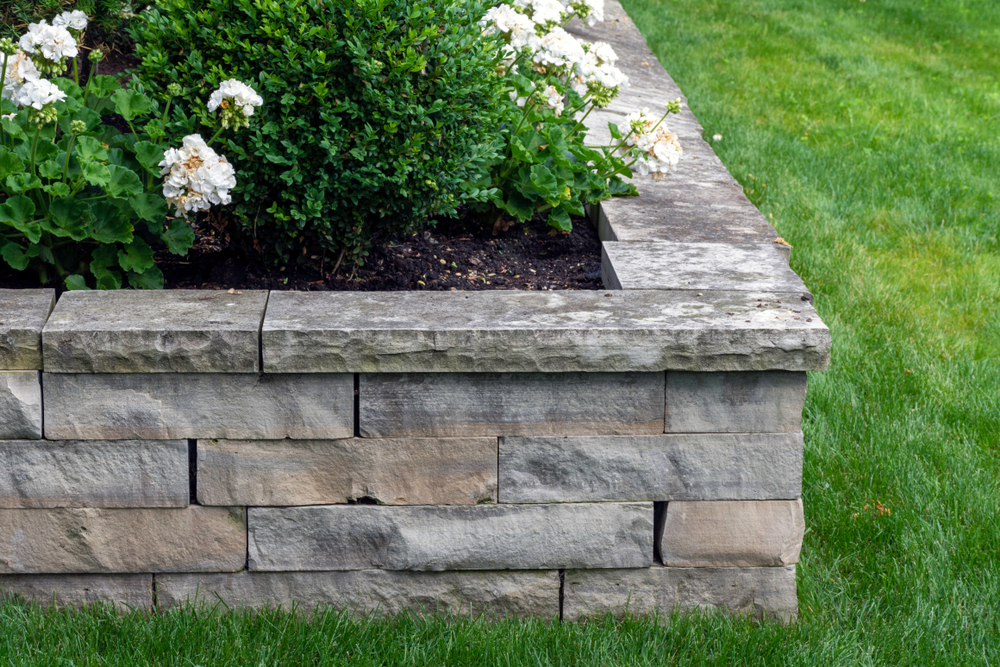
For rock walls, the focus is typically on the dry-stack technique or mortar integrity. Over time, soil can wash out from between the rocks, creating unstable voids. Filling these gaps with smaller stones and securing them with modern, corrosion-resistant hardware or fresh mortar will stabilize the structure.
Concrete and Gabion Walls
Concrete walls often suffer from cracks caused by settling or temperature fluctuations. Minor cracks can be sealed using an epoxy injection system. However, if the concrete is bowing significantly, installing wall anchors or carbon fiber strips is necessary.
Gabion walls (wire cages filled with stone) are highly durable but can compromise if the wire mesh rusts or breaks. Repairing them involves replacing damaged wire sections and making sure internal connecting wires are intact. If your property features a failing masonry or concrete system, securing a timely evaluation for a retaining wall in Blue Bell, PA can reinforce the system before shifting roots or frost heaving cause irreversible destruction.
Proactive Maintenance Tips
Implementing consistent, preventative maintenance is the best way to avoid the high costs of a total wall reconstruction.
- Clear Weep Holes: Clear debris from weep holes at least twice a year to secure unhindered drainage.
- Manage Vegetation: Keep trees at a safe distance, as large root systems exert incredible pressure against the back of the wall.
- Divert Water: Make sure your home’s gutter downspouts are directed away from the area behind the retaining wall to reduce water accumulation.
- Apply Masonry Sealer: Apply a high-quality masonry sealer to concrete or stone every few years to minimize water absorption and freeze-thaw damage.
When to Call the Professionals
While small, cosmetic repairs can be handled as a DIY project, complex structural issues require professional intervention. If your wall is over three feet tall, shows signs of significant leaning, or requires municipal permitting, it is time to call in a specialist.
Companies like Rich’s Landscaping specialize in diagnosing complex hardscaping issues, utilizing advanced machinery like mini-excavators to execute large-scale structural repairs safely and efficiently. Investing in professional wall repairs provides lasting durability, protects your landscape, and makes sure your home complies with local building codes.
Restore Your Property’s Strength Today
Don’t let a leaning or cracked wall turn into an expensive landscape collapse. Trust the hardscaping specialists at Rich’s Landscaping to diagnose your drainage issues, reinforce your foundation, and rebuild your walls with premium craftsmanship.
Contact Rich’s Landscaping today for a professional consultation and free quote!