
You’ve probably driven over yours a thousand times without giving it much thought, but that concrete or paver ribbon leading to your garage is doing way more work than just getting your car from point A to point B.
If you’ve ever questioned whether your driveway qualifies as a hardscape or if it falls into some strange middle ground, the answer is straightforward: your driveway is unquestionably hardscape, and it’s most likely the largest portion that you own.
Understanding Hardscape vs Softscape
Think of your outdoor space as two teams working together. On one side, you’ve got softscape, the living players like grass, flowers, shrubs, and trees. These are the elements that grow, change with the seasons, and need regular watering and trimming. On the other side sits hardscape, the permanent structures built from materials like concrete, natural stone, brick pavers, and other durable materials.
Anything non-living and solid that gives your yard structure is considered hardscaping. This includes steps, fire pits, patios, walks, retaining walls, outdoor kitchens, and yes, driveways. Although these elements don’t require fertilizer or watering, they do need a certain amount of maintenance to remain functional and appealing over time.
Since your driveway is a manmade surface meant to support weight and withstand weather, it definitely belongs in the hardscape category. If it is harmed, it will not regrow like your lawn. It is designed to last for decades without significant modifications and is precisely constructed and fitted.
Why Your Driveway Is the Hardscape Heavy Hitter
Most driveways take up more square footage than any other hardscape feature on a residential lot. While your patio might hide in the backyard, your driveway sits front and center, often visible from the street. It’s usually the first thing visitors see when they pull up to your home.
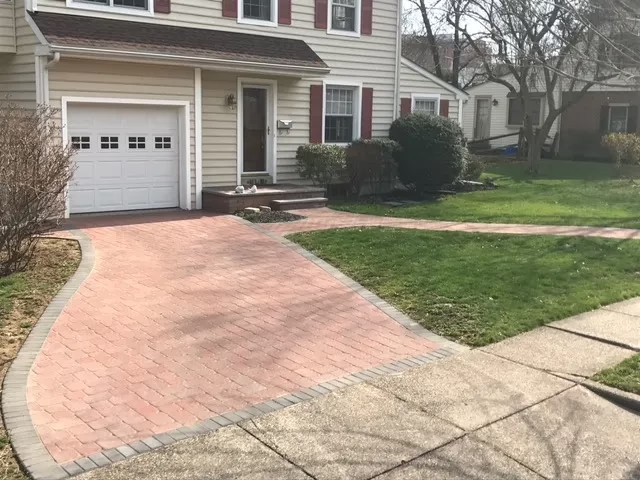
Because of its size and visibility, your driveway often sets the aesthetic tone for your entire property. If you choose natural stone pavers for the driveway, you’ll probably want to carry that look through to your walkways or front steps. A paver driveway with intricate patterns might inspire coordinated hardscaping throughout your outdoor living space.
Driveways support significantly heavier loads than other outdoor surfaces:
- Unlike walkways, they must handle vehicles weighing several thousand pounds
- Deeper base preparation is required to prevent shifting and cracking
- Stronger materials are needed to withstand constant weight and use
- More precise engineering is necessary compared to other hardscape features
Material Options That Define Your Hardscape
The material you pick for your driveway affects how it looks, how long it lasts, and how much maintenance it demands. Since driveways are hardscape, the materials are almost always rigid and weather-resistant. Here’s what most people choose and why.
Concrete Pavers
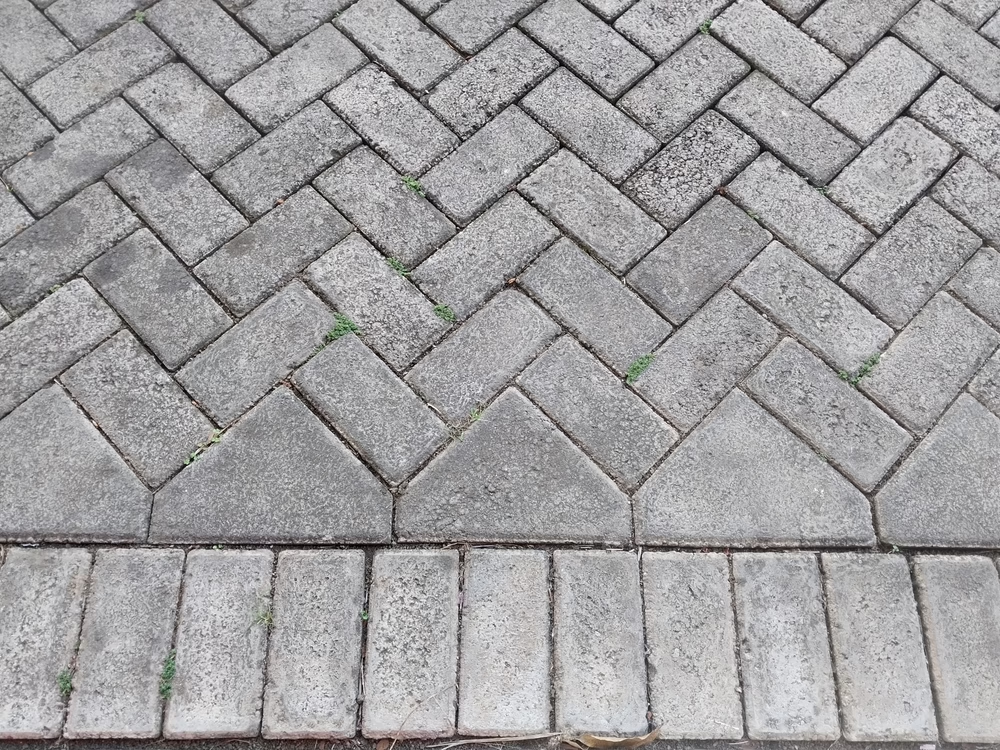
Interlocking concrete pavers offer exceptional durability and design flexibility. These individual units can handle freeze-thaw cycles without cracking like solid slabs because they move slightly with ground shifts.
- Available from manufacturers such as EP Henry, Techo-Bloc, Cambridge, CST, Unilock, and Belgard
- Offered in a wide range of colors, textures, and finishes
- Support design options like herringbone patterns, running bonds, and custom layouts
- Create a visually striking driveway that adds long-lasting value to your hardscape investment
Natural Stone
Natural stone delivers timeless elegance that only gets better with age. Whether you choose bluestone, flagstone, or granite pavers, you’re getting a unique material that no two properties will share identically. Stone works beautifully for driveways when you want to create a high-end, custom look. It pairs perfectly with other hardscape elements like stone retaining walls or natural stone patios, creating visual continuity across your entire property.
Poured Concrete
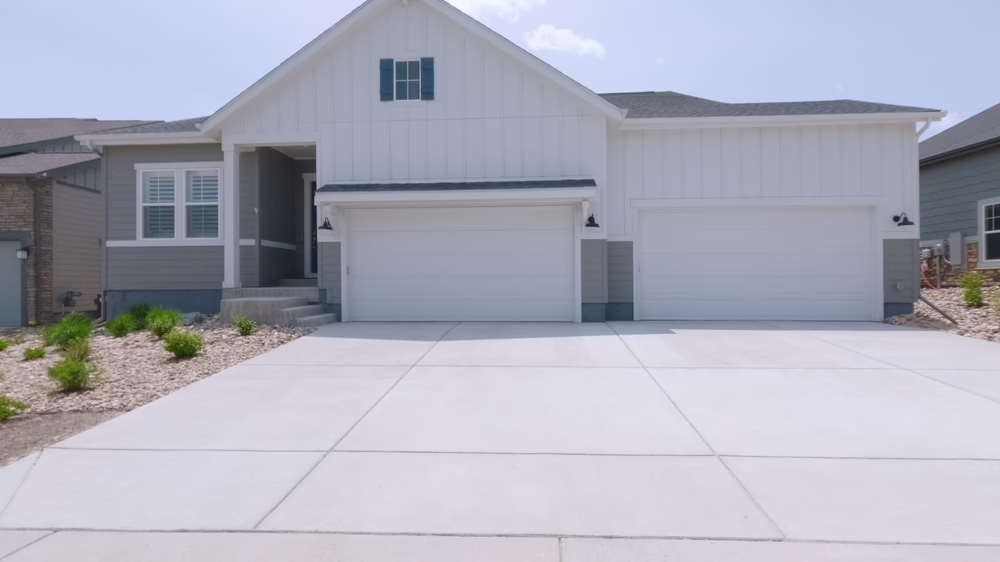
Traditional poured concrete remains popular for its clean lines and smooth surface. It can be stamped to mimic other materials or stained in various colors. While it lacks the individuality of pavers or natural stone, it offers a straightforward, functional solution. However, concrete slabs are more prone to cracking than paver systems because they can’t flex with ground movement.
Common Hardscape Materials Comparison
| Material | Durability | Maintenance Level | Design Flexibility | Best For |
| Concrete Pavers | 25+ years | Low | Excellent | Pattern versatility, repair ease |
| Natural Stone | 30+ years | Low | Very Good | Luxury appeal, unique character |
| Poured Concrete | 20-30 years | Moderate | Limited | Budget-conscious, modern aesthetic |
| Brick Pavers | 25+ years | Low | Good | Traditional homes, classic look |
| Permeable Pavers | 20+ years | Low to Moderate | Good | Eco-friendly drainage solutions |
The Foundation That Makes or Breaks Your Hardscape
Just as important as what is on top of your driveway is what takes place beneath it. A driveway built on a weak foundation cannot be saved by an attractive paver surface. The installation procedure separates a long-lasting driveway from one that breaks down in a few years.
The organic topsoil, which is too fragile and unstable to support large weights, must first be removed through excavation. In order to access firmer subsoils that can support the weight of cars without shifting, professional installers dig down. A stable base is created by compressing layers of crushed stone following excavation. By distributing the weight of the car over a larger area, this base keeps the driveway from sinking or getting ruts.
The longevity of your driveway depends on the caliber of this foundation construction. Expert hardscape contractors are aware that proper base preparation is essential. Your driveway can be supported for decades with no upkeep if the foundation is properly placed.
Managing Water in Hardscape Design
Managing water is a challenge in any large-scale hardscape development. Rain cannot seep into the soil where it falls when the ground is covered by impermeable materials. It must go somewhere else, and if you don’t prepare for it, your property may experience erosion, pooling water, or even foundation damage.
Every driveway needs a slight slope to move water away from structures. Professional hardscape installers calculate this grade carefully so water flows off without creating puddles or ice patches. The pitch is usually subtle enough that you won’t notice it visually, but it makes all the difference functionally.
Permeable hardscape options are becoming more popular for people who want to manage stormwater better. Permeable pavers have wider joints filled with gravel that let water filter through to the ground below. This approach reduces strain on storm drains and helps replenish groundwater naturally while still providing a solid driving surface.
Checking Your Driveway’s Health
Sometimes, being aware of an impending problem, before things take a turn for the worst, is your best defense.
Watch for these warning signs:
- Uneven pavers or settling sections: Individual pavers that have sunk or shifted suggest base problems underneath
- Wide gaps between pavers: Separation wider than normal indicates movement or poor initial installation
- Pooling water after rain: Water should drain off within a few hours, not sit for days
- Weed growth in joints: While normal to some degree, excessive weeds suggest joint sand has washed away
- Edge deterioration: Crumbling borders often mean the base wasn’t extended far enough during installation
Connecting Your Hardscape Elements
Instead of viewing the driveway as a stand-alone piece, a well-designed property views it as a component of a larger whole. Your driveway will naturally lead folks from the street to your front door when it is visually connected to other hardscape elements. This relationship is important for both appearance and functionality.
Think about linking your driveway to your front porch with a walkway made of the same or complementary materials. If your driveway uses EP Henry pavers in a certain color, carrying that same paver to your walkways creates sophisticated visual continuity. This kind of thoughtful coordination makes your whole property feel intentional and polished.
Retaining walls are another hardscape feature that often intersects with driveways, and for properties that require a retaining wall in Montgomery County, PA, homeowners often use this structure to hold back soil and create a flat, stable area for the driveway. Using matching stone or pavers for both the wall and driveway creates a custom, high-end appearance.
How Professional Hardscaping Creates Cohesive Outdoor Spaces
Your driveway doesn’t exist in isolation. It’s part of a complete hardscape design that can include patios, walkways, retaining walls, fire pits, and outdoor kitchens. When these elements work together with matching or complementary materials, they transform your property into a cohesive outdoor living space.
Consider these hardscape combinations:
- Driveways and walkways in matching pavers create seamless transitions from street to entry
- Fire pit patios connected to driveways through coordinated hardscape pathways
- Retaining walls that use the same stone or paver family as your driveway
- Outdoor kitchens and entertainment areas that echo the driveway’s material choices
- Water features bordered by pavers that complement your driveway design
Professional hardscape contractors in Montgomery County and elsewhere understand how to tie these elements together. They consider the entire property when selecting materials, ensuring your driveway, patio, walkways, and walls all work in harmony. This comprehensive approach creates outdoor spaces that feel intentionally designed rather than pieced together over time.
Taking Care of Your Hardscape Investment
Since your driveway is hardscape, its maintenance needs differ from your lawn or garden beds. You’re not watering or pruning, but you do need to clean, seal, and maintain joints to keep it looking good and functioning properly. The work is less frequent but important for protecting your investment.
Weeds are the enemy of paver driveways. They find joints to take root, and polymeric sand helps prevent this when properly applied. Regular sweeping and occasional joint sand replenishment keep your pavers tight and weed-resistant. Power washing once or twice a year removes organic buildup and keeps colors bright.
Key maintenance tasks include:
- Sweeping regularly to prevent debris buildup and weed seeds from settling
- Pressure washing annually to remove stains and organic growth
- Reapply joint sand as needed to keep pavers locked together
- Sealing every few years to protect against stains and enhance color
- Replacing damaged pavers individually when necessary, which is easier than repairing concrete slabs
The Value Your Hardscape Adds
A well-maintained driveway delivers serious returns when it comes to property value and curb appeal. First impressions matter enormously, and a beautifully installed paver driveway tells potential buyers the property has been cared for. Conversely, a cracked or deteriorating driveway suggests neglect.
Upgrading from basic asphalt or concrete to quality pavers can significantly boost your home’s appraised value. Premium materials from manufacturers like Techo-Bloc, Belgard, or Unilock are perceived as luxury features that offer both durability and style. These investments often return 70-80% of their cost when you sell.
Functionality counts too. Driveways in Warrington and throughout the state that are wide enough for multiple vehicles or include a turnaround area are more valuable than a narrow single-car strip. Buyers appreciate practical usability alongside good looks when evaluating a property.
Making Smart Hardscape Decisions
Your driveway is one of the most fundamental hardscape elements on your property. It provides essential function, defines the look of your entrance, and requires specialized installation to handle daily use.
Viewing it through the lens of hardscaping helps you make smarter choices about materials, drainage, and upkeep. It’s not just where you park your car; it’s a permanent structure that anchors your entire outdoor design and works in concert with your other hardscape features.
When you’re ready to transform your property with professional hardscape design and installation, Rich’s Landscaping, Inc brings decades of expertise to every project. Reach out to our team today to schedule a consultation and discover how expert hardscaping can elevate your property.